Homemade Easter Bread

Grandma's Recipe

Homemade Easter Bread (Grandma's Recipe)

This recipe has been passed down through generations, from my great-grandma in Italy to my grandma in a small American coal town, shared by my sisters, and now a sweet tradition in my own kitchen.
It’s made with eggs, cream, butter, and sugar, giving it that rich, tender texture we all remember from childhood.

Over 100 years ago, our great-grandmother brought her bread recipe across the ocean to a coal town in America. My grandma learned it from her, and every Easter, they would bake 32 loaves in a single day for all the families in their community. With no running water at home, they hauled buckets from the coal tipple, one of the few places with access to water, and baked in outdoor brick ovens, keeping tradition alive with love.

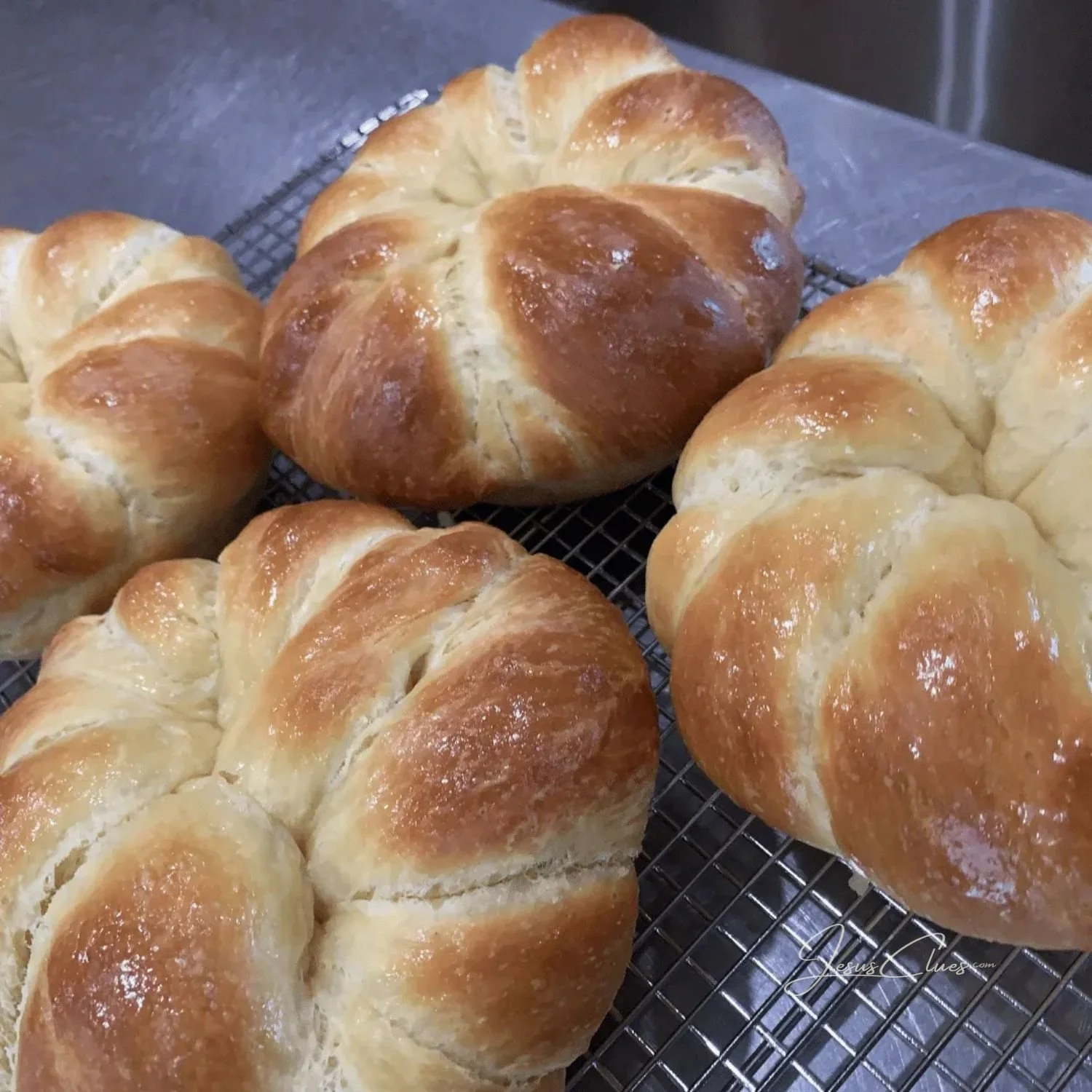
What comes out of the oven is golden, rich, and full of comfort, just the way Grandma made hers.

Plan for about 6 to 7 hours, start to finish.
This recipe makes 4 loaves, baked in 6-inch pie plates.

Before we dive in, here’s a quick look at what’s ahead.

At a Glance: Total Time: 6–7 hours • Yield: 4 small loaves • Difficulty: Cozy afternoon project

A little timeline to help you plan your baking day.

Time Guide: Prep 30 min • 1st Rise 1 hr 15 min • 2nd Rise 1 hr 15 min • Final Proof 1.5–2 hr • Bake & Cool ~1 hr

Just a Little Welcome Before We Begin

Come on in, grab a cup of coffee, and let’s bake together.

If you’ve never baked bread before, don’t worry, I’ll walk you through every step like we’re side by side in the kitchen.  I’ve included lots of tips and photos to help you feel confident, cozy, and never alone in the process. 

Let’s make something special together.

Just a Little Tip from Our Kitchen

Before you dive in, take a minute to read through the recipe. It’ll give you a feel for how to make it. Especially with the rising times, and help make sure you’ve got all your ingredients and tools ready. 

A little prep upfront makes the whole process smoother and way more enjoyable.  Now you're all set, let’s turn flour and sugar into sweet new memories. 

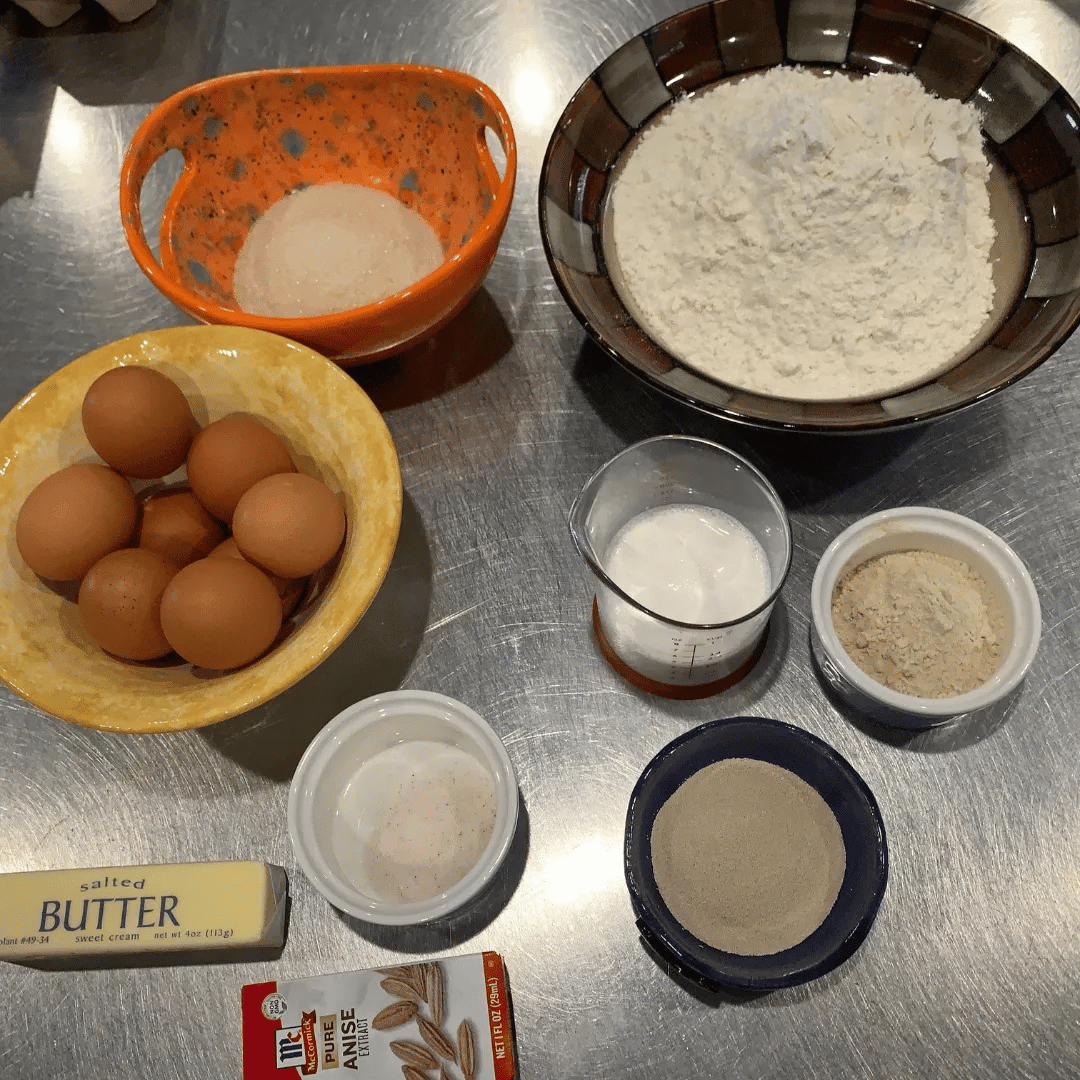
Baking ingredients including eggs, flour, sugar, milk, butter, and various seasonings on a metal surface.

Ingredients

(Makes 4 small loaves, baked in 6-inch pie plates)

  1. 8 large eggs
    (About 1⅔ cups / 391g total. Yes, it's a lot, but that makes the bread so rich and tender.) 

  2. ½ cup half & half
    (Half & half is a dreamy mix of whole milk and cream bought in the grocery store's dairy aisle. Warm it just slightly to about 110°F.) 

  3. 5 tsp instant dry yeast
    (I use Fleischmann’s Instant Dry Yeast, it’s always been reliable for me.) 

  4. 6 cups (720g) all-purpose flour
    ( I use King Arthur All-Purpose Flour for this bread, it gives the dough a perfect, soft structure thanks to its gluten content. If you don’t have it, any all-purpose flour will work well. You can even try bread flour, though I’ve never personally used it with this recipe, but I bet it would be great too!)

  5. ½ cup (100g) granulated sugar
    (Just enough to sweeten, not make it a dessert.) 

  6. ¼ cup (30g) vital wheat gluten optional
    (I use Bob’s Red Mill. It gives the bread beautiful structure and rise, but if you don’t have it, feel free to skip it. Grandma never used it, and her bread always turned out amazing.) 

  7. 2 teaspoons (12g) salt
    (Lately, I’ve been using Redmond Real Salt, Ancient Fine Sea Salt, and I love it in baking. I still keep iodized salt around, too, just like always.) 

  8. 2 tablespoons (1 oz) pure anise extract optional
    (I use McCormick. It adds that nostalgic aroma and flavor I always associate with Grandma’s Easter bread. But if you’re not a fan of anise, you can leave it out.) 

  9. 1 stick (½ cup / 110g) salted butter, melted
    (Rich, comforting, and everything this bread wants.)

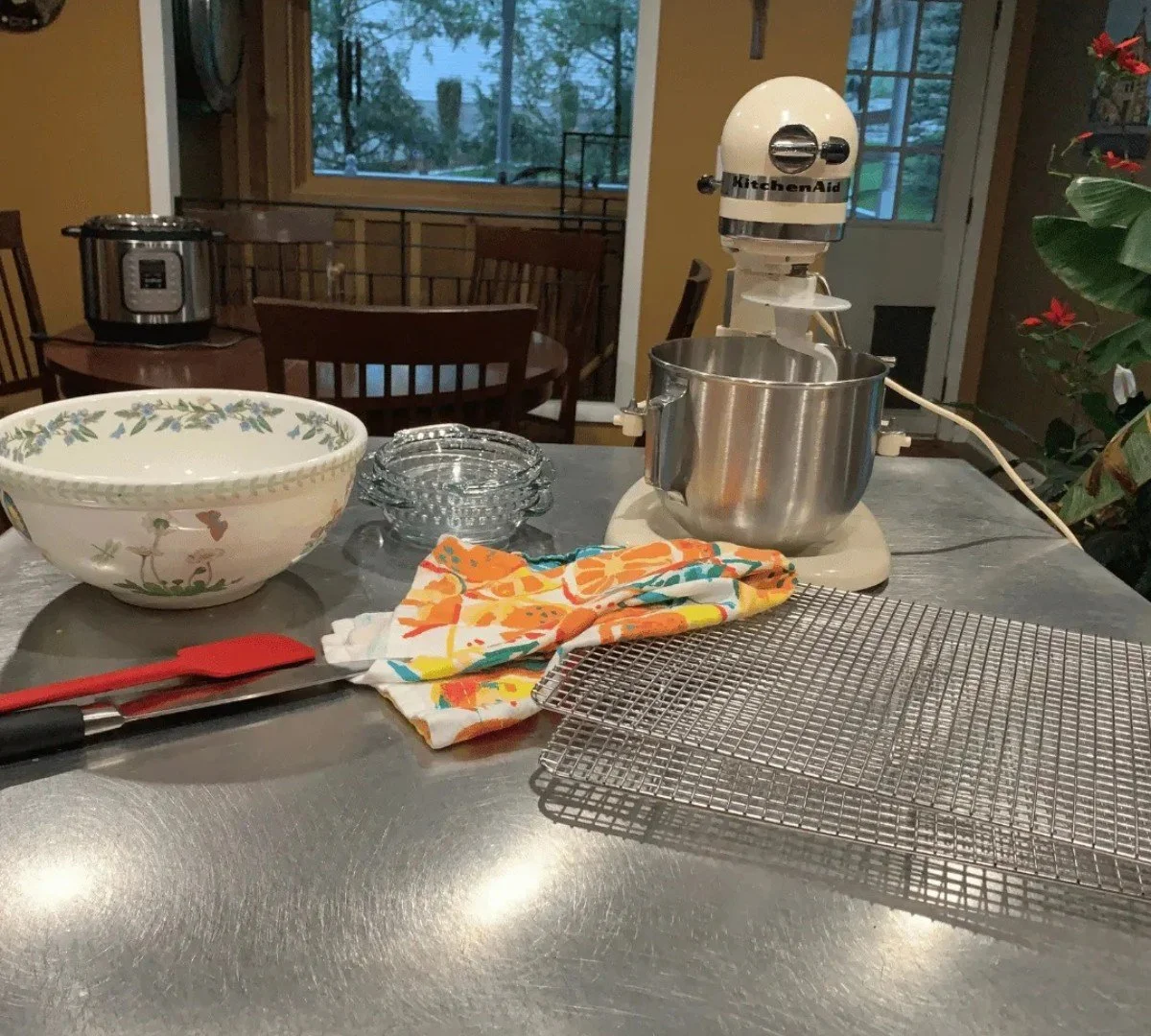
Kitchen countertop with mixing bowl, glass bowl, kitchen aid stand mixer, cooling rack, and dish towel, with a window and dining area in the background.

Tools & Supplies 

My sisters and I make ours in the KitchenAid mixer, it quickly brings the dough together and kneads it just right. If you’re using a different stand mixer, just keep an eye on the dough and knead until it feels tacky and smooth.

(And of course, kneading by hand, just like Grandma did, still works beautifully!)

No worries if you don’t have a thermometer or kitchen scale, Grandma never used one, and her loaves were always perfect.  

  1. Crisco or nonstick spray
    (For greasing bowls and plates) 

  2. Four 6-inch pie plates
    (This recipe makes 4 loaves) 

  3. Baking sheet optional
    (We like to set the four pie plates on a baking sheet before sliding them into the oven, it makes things a little easier when moving them around, especially with soft, risen dough. Just one of those little tricks that helps things go smoothly.) 

  4. Plastic wrap (like Saran Wrap)
    (To cover the dough during rising) 

  5. Flour, towel, or lint-free cloth
    (To gently cover the dough as it rises, keeps it cozy and prevents a dry crust from forming) 

  6. Thermometer optional
    (Helpful for checking liquid temp or doneness, but not required) 

  7. KitchenAid mixer with bowl and dough hook, sprayed with nonstick spray
    (Or another sturdy stand mixer, or knead by hand like Grandma did.) 

  8. Kitchen scale optional
    (I love using it for accuracy, but it’s not required) 

  9. Two cooling racks
    (For letting the loaves cool fully before wrapping, helps them prevent soggy bottoms) 

  10. Instant Pot optional
    (I like to use it to create a perfectly warm spot for rising, just set it to the Yogurt setting. It keeps the dough cozy and can even help it rise a bit faster.)

 Once you're ready, we’ll begin the sweetest kind of tradition, one loaf at a time. 

 Your Step-by-Step Guide to Grandma’s Bread 

A bowl of raw eggs, a measuring cup with flour, a small container with more eggs, and a glass measuring cup with water on a stainless steel countertop.

 Step 1: Prepare Butter, Eggs & Half-and-Half
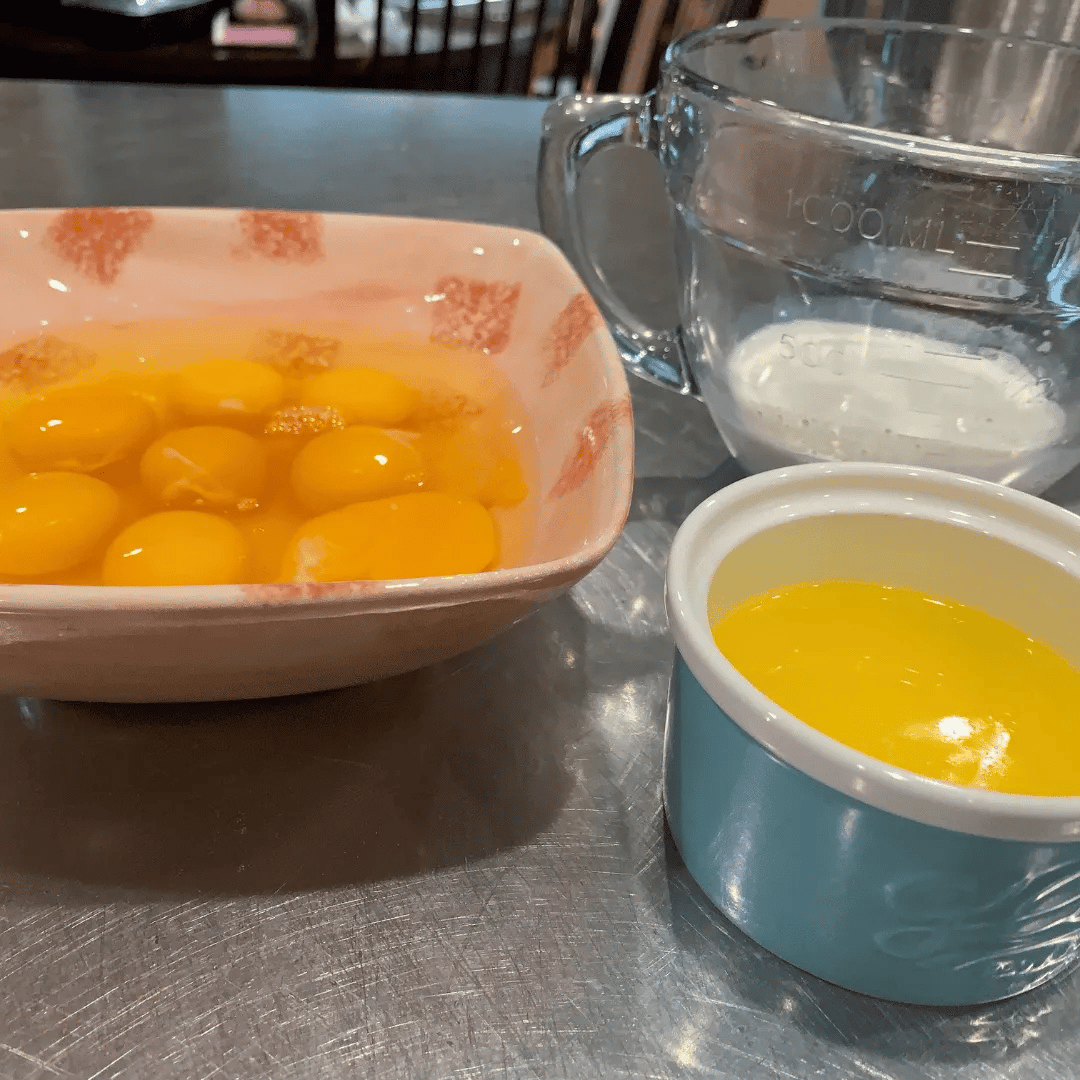
  • Melt the butter and let it cool slightly, it should be warm but not hot (under 100°F is perfect). 

  • Let the eggs come to room temperature.
    Tip: If you're short on time, place them (in the shell) in a bowl of warm water for about 4 minutes. 

  • Warm the half & half in the microwave for about 20–50 seconds, or until it reaches around 110°F. warm to the touch, but not hot.

Tip: Microwave ovens vary, so the time to reach 110°F can differ. It’s best to check with a thermometer if you have one, or just aim for “warm to the touch,” not hot. 

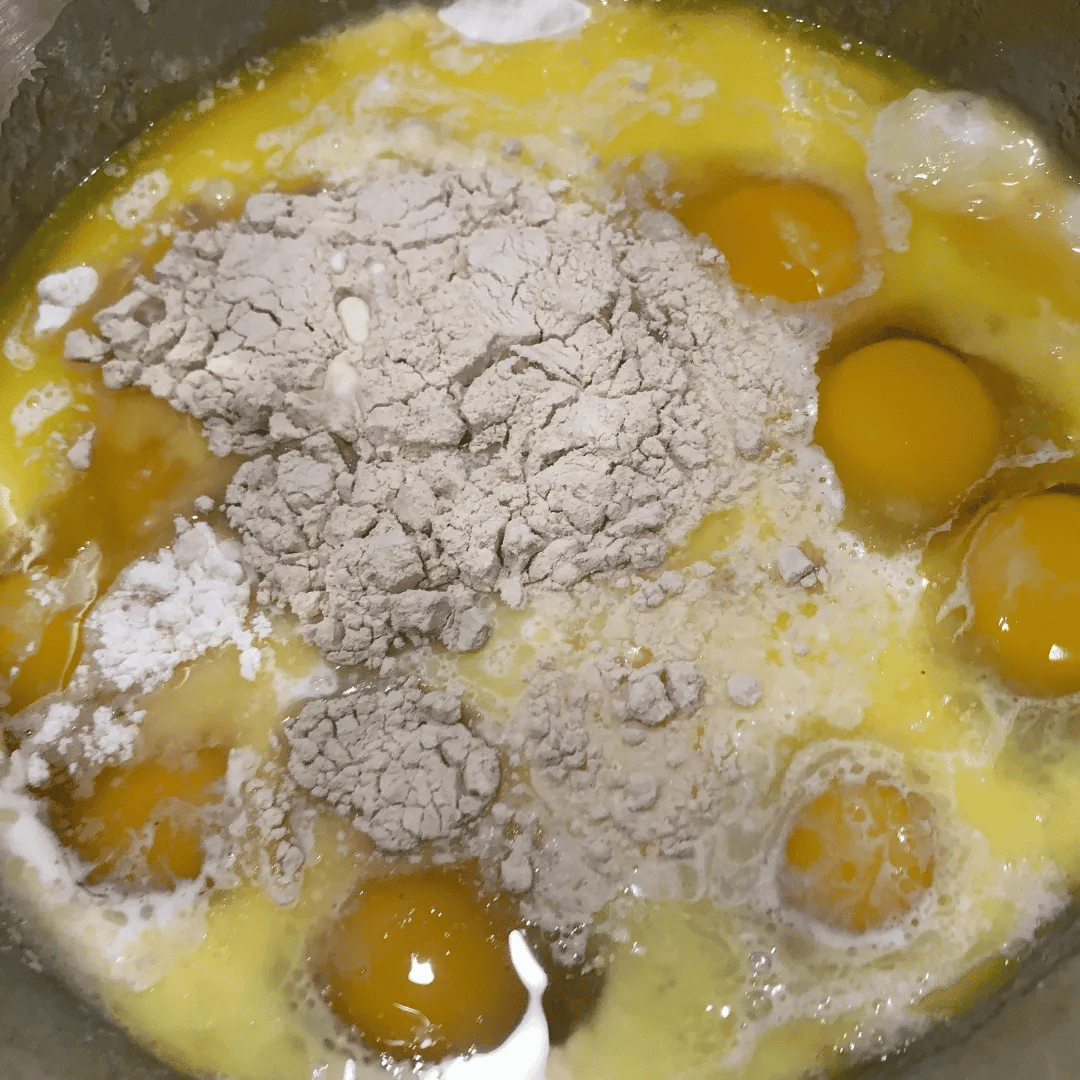
Eggs with flour added in a mixing bowl, ready to be mixed for cooking.

Step 2: Add Ingredients to Your Mixing Bowl

In a large mixing bowl (or the bowl of your stand mixer), combine the following:

The order of the ingredients isn't a big deal for a quick “dump and mix” method.

If you let the bowl sit before mixing, it’s best to layer ingredients in the order listed. That will keep the yeast away from the salt.

  • 6 cups (720g) all-purpose flour 

  • ½ cup (100g) granulated sugar 

  • ¼ cup (30g) vital wheat gluten optional

  • 2 teaspoons (12g) salt 

  • 8 eggs (about 1⅔ cups) 

  • 2 tablespoons (1 oz) pure anise extract optional

  • 1 stick melted butter (cooled slightly, about 80°F to 100°F)  

  • 5 teaspoons instant dry yeast (put in last)

Flour and eggs in a mixing bowl, with a spoon pouring liquid into the mixture.

Step 3: Mix the Dough 

 Mix the dough for 6 to 8 minutes on speed 2.
(Speed 2 is usually perfect for kneading in most stand mixers. I’ve found that 6 minutes works just right for me.) 

The dough should look soft and stretchy, maybe a little loose in the bowl, that’s exactly what you want for a rich, eggy dough.

You’re aiming for a soft, tacky texture, not soupy.

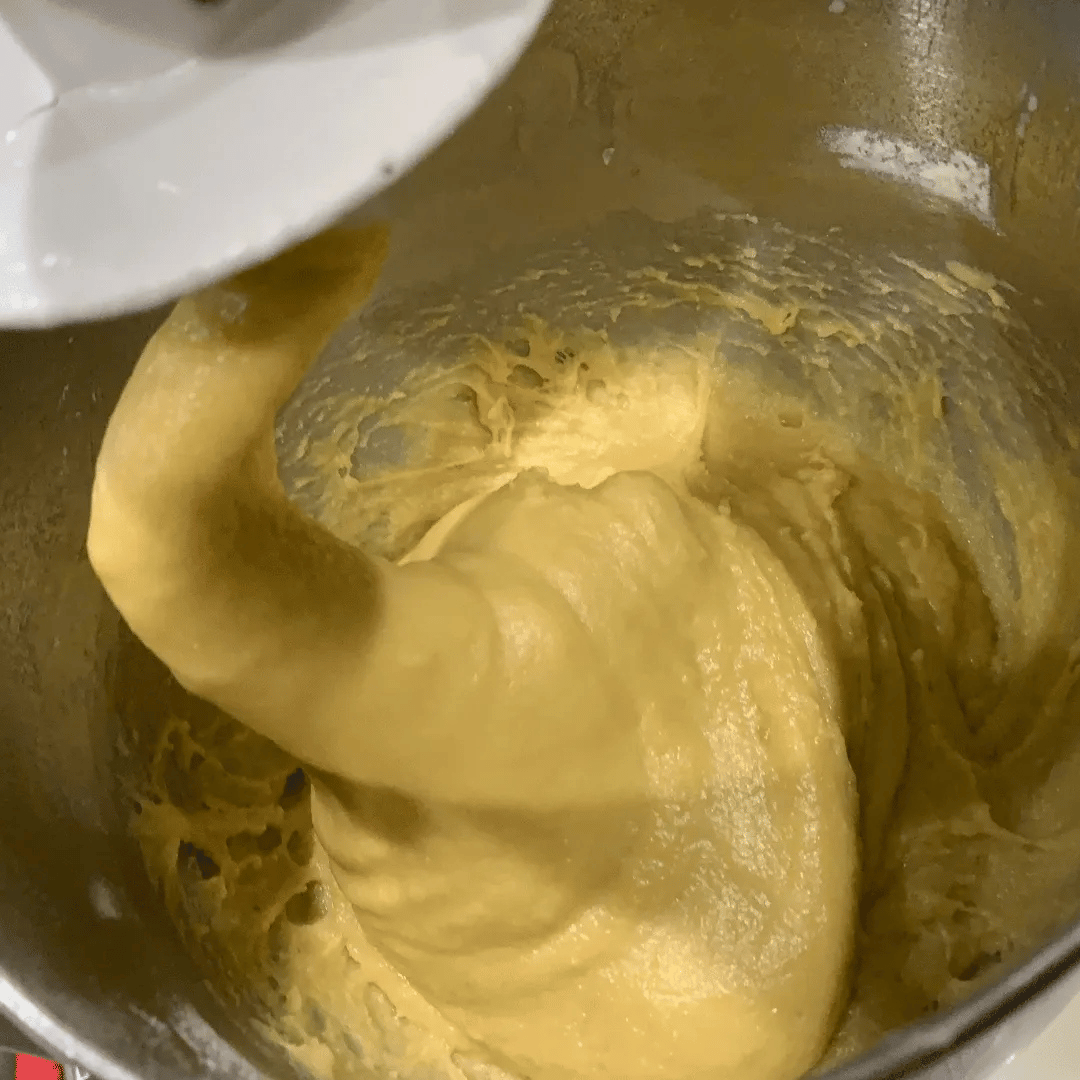
Close-up of yellow dough or batter being mixed in a metal mixing bowl.

Step 4: Check Dough at 6 Minutes

After mixing the dough, it should feel sticky but workable, elastic, pliable, and soft to the touch (as shown in the picture). If the dough doesn't form a tight ball, don’t worry, it will firm up as it rises.

To check the consistency, give the dough a gentle touch with clean hands:

If it sticks a lot to your fingers, it’s a little too wet, just sprinkle in more flour, a tablespoon at a time, until it’s tacky but manageable.

If just a bit sticks, that’s perfect.

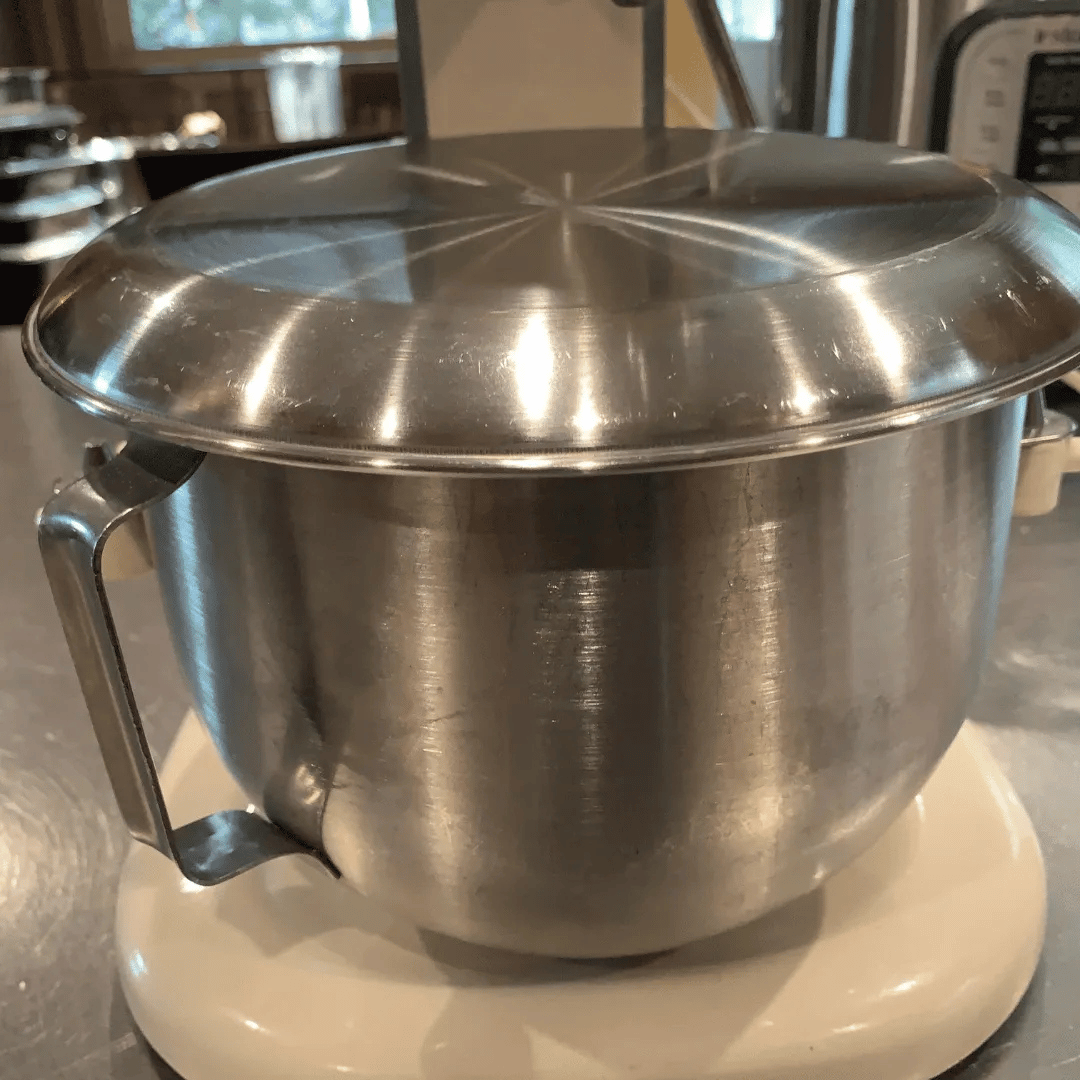
Stainless steel mixing bowl with a lid, sitting on a white scale in a kitchen setting.

Step 5: Resting Time for the Dough

Leave the dough in the mixer bowl and cover it with a plate or a clean kitchen towel. Let it rest for 15 minutes.

This brief pause allows the dough to relax, making it easier to shape and helping to develop the tender, stretchy texture we love.

It’s a simple step, but it makes shaping much smoother.

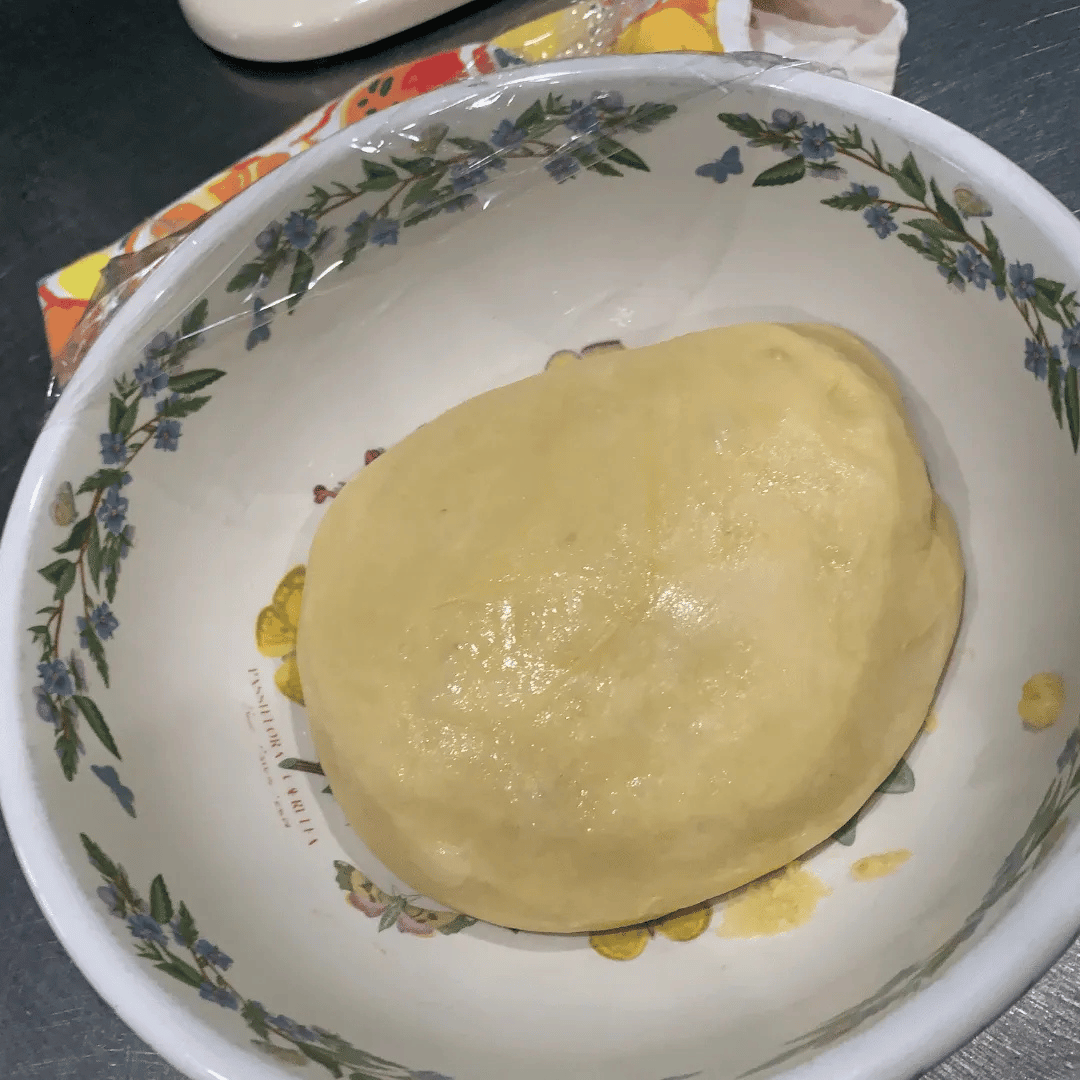
A ball of yellow dough in a floral-patterned mixing bowl.

Step 6: Tuck and Turn the Dough

After resting, transfer the dough to a clean surface. Gently shape it into a smooth ball using lightly greased hands (Crisco or a quick spritz of nonstick spray).

I like to use a soft “tuck and turn” motion, cupping the dough with both hands and folding the edges underneath as I turn it. This creates a smooth, even top without overworking the dough. I usually do about five gentle tucks and turns.

Once it’s shaped, place the dough in a greased bowl (if you're using the oven or room-temperature method) or in the greased insert of your Instant Pot. 

Now, it’s ready for its first rise.

Step 7: Find a Cozy Spot for Raising

Place your dough ball into a greased bowl if you’re using the oven or letting it rise at room temperature.
If you’re using an Instant Pot, place it in the greased insert.

Grandma’s Tip: 

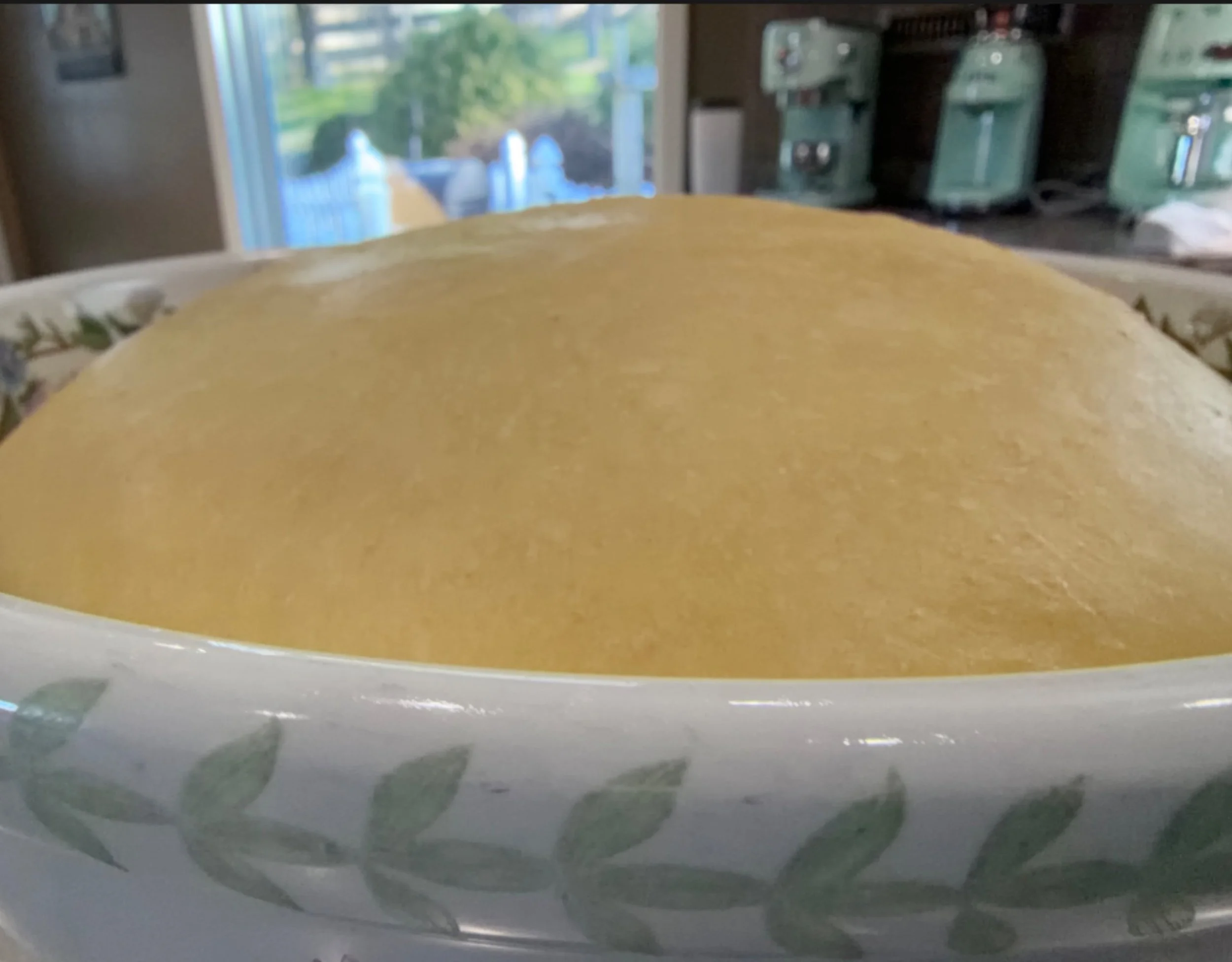
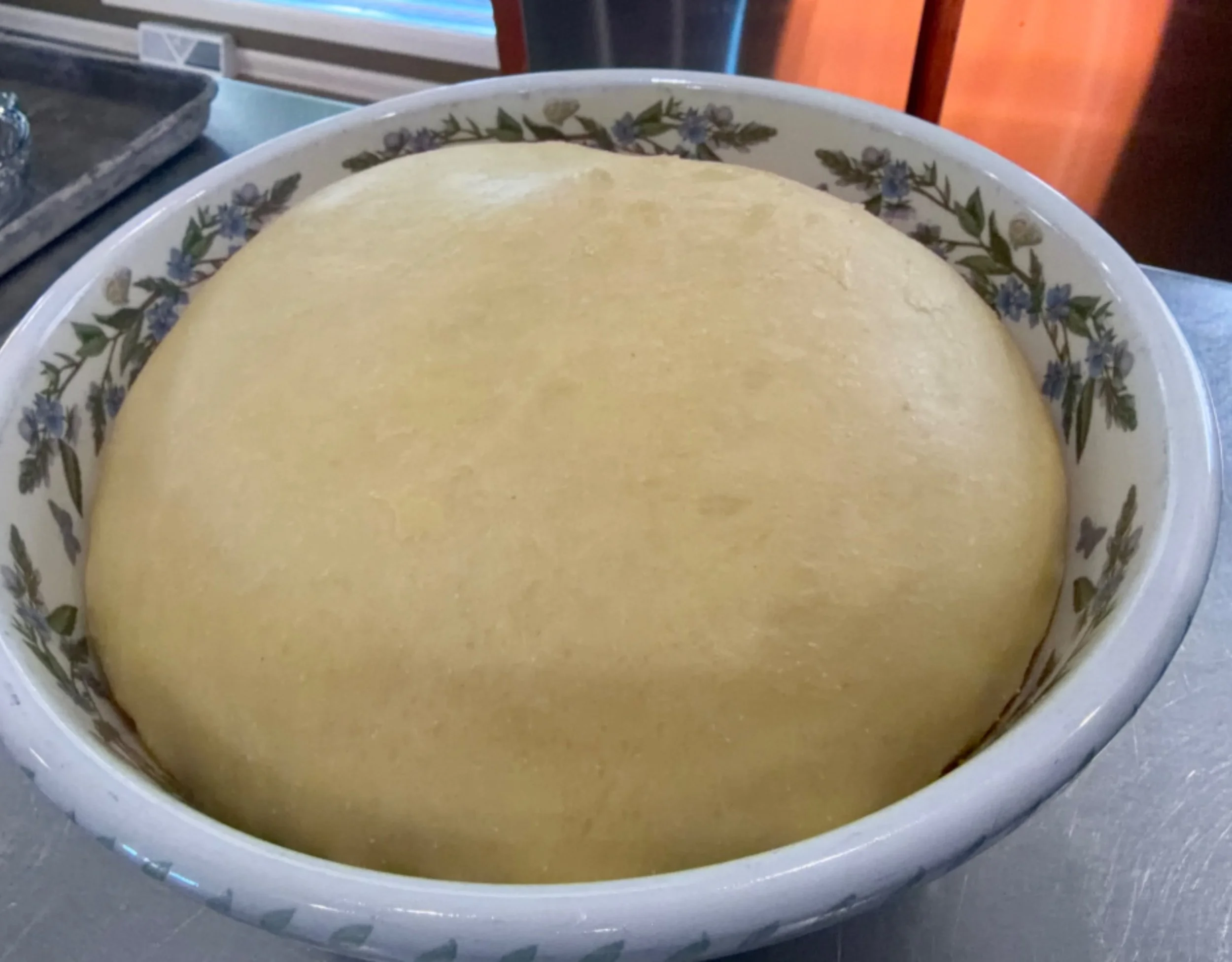
Every kitchen is different; some are a touch cooler, some a bit warmer. So don’t worry too much about the clock. Instead, keep an eye on the dough. When it looks soft, puffy, and doubled in size, it’s ready to move on, just like Grandma always knew.

Before you cover the bowl, don’t forget one of her little tricks: a gentle pat of oil on top. She’d rub a bit of Crisco on her hands and softly tap the dough to keep it from drying out while it rose. Or you can spritz your fingers with nonstick spray and do the same. 

Oven Method

1st Rise: Turn your oven on for just 1–2 minutes to warm it up, then turn it off. Place your covered dough in the oven with the light on, and let it rise for about 1 hour and 15 minutes, or until it’s doubled in size.

2nd Rise: Lightly grease the back of your hand and gently press the dough down to release some of the air. Reshape the dough into a smooth ball, cover it again, and return it to the warm oven for another 1 hour and 15 minutes, or until doubled.

Room Temperature Method

1st Rise: Cover the dough with plastic wrap or a towel, and place it in a warm, draft-free spot. Let it rise for about 1½ to 2 hours, or until it’s soft, puffy, and doubled in size.

2nd Rise: Lightly grease the back of your hand and gently press the dough down to release some of the air. Reshape it into a smooth ball, cover it again, and let it rise in that same cozy spot for another 1½ to 2 hours, or until doubled. 

1st Rise: Place the dough in the greased Instant Pot insert and cover it with a plate or the pot’s lid, just don’t seal it. Set the Instant Pot to the Yogurt setting for about 30 minutes, or until the dough is soft, puffy, and doubled in size.

2nd Rise: Lightly grease the back of your hand and gently press the dough down to release some of the air. Reshape it into a smooth ball, return it to the insert, cover it again, and set it to Yogurt for another 30 minutes, or until doubled.  

No big punches here, just a little squish.

This step is one of those quiet in-betweens in breadmaking. The dough has done so much work, and now we gently help it reset. We’re just letting out a little air, waking up the yeast, and giving the dough a fresh start. It's simple, gentle, and full of purpose, just like good baking should be.

S – See if the Dough has Risen

Uncover the dough and check: it should look puffy, smooth, and almost doubled in size. The surface will have that soft, domed balloon look, like it’s full of bread air.

Q – Quick Oil if Needed

If your dough feels sticky, lightly grease the back of your hand with a touch of oil or nonstick spray. It’s optional, but it keeps things clean and confident.

U – Use the Back of Your Hand

Gently press into the center with the back of your hand or knuckles. You're not punching, you're deflating with love. It should sink slowly, maybe even whisper a tiny sigh of air.

I – Inward Folds

Grab the edges of the dough and fold them toward the center. Do this a few times, like you’re giving it a cozy dough hug. This redistributes yeast and resets its internal structure.

S – Set It on the Surface

Carefully turn the dough out onto your lightly floured or greased work surface. It should feel soft, stretchy, and chill, like it’s ready for the next step.

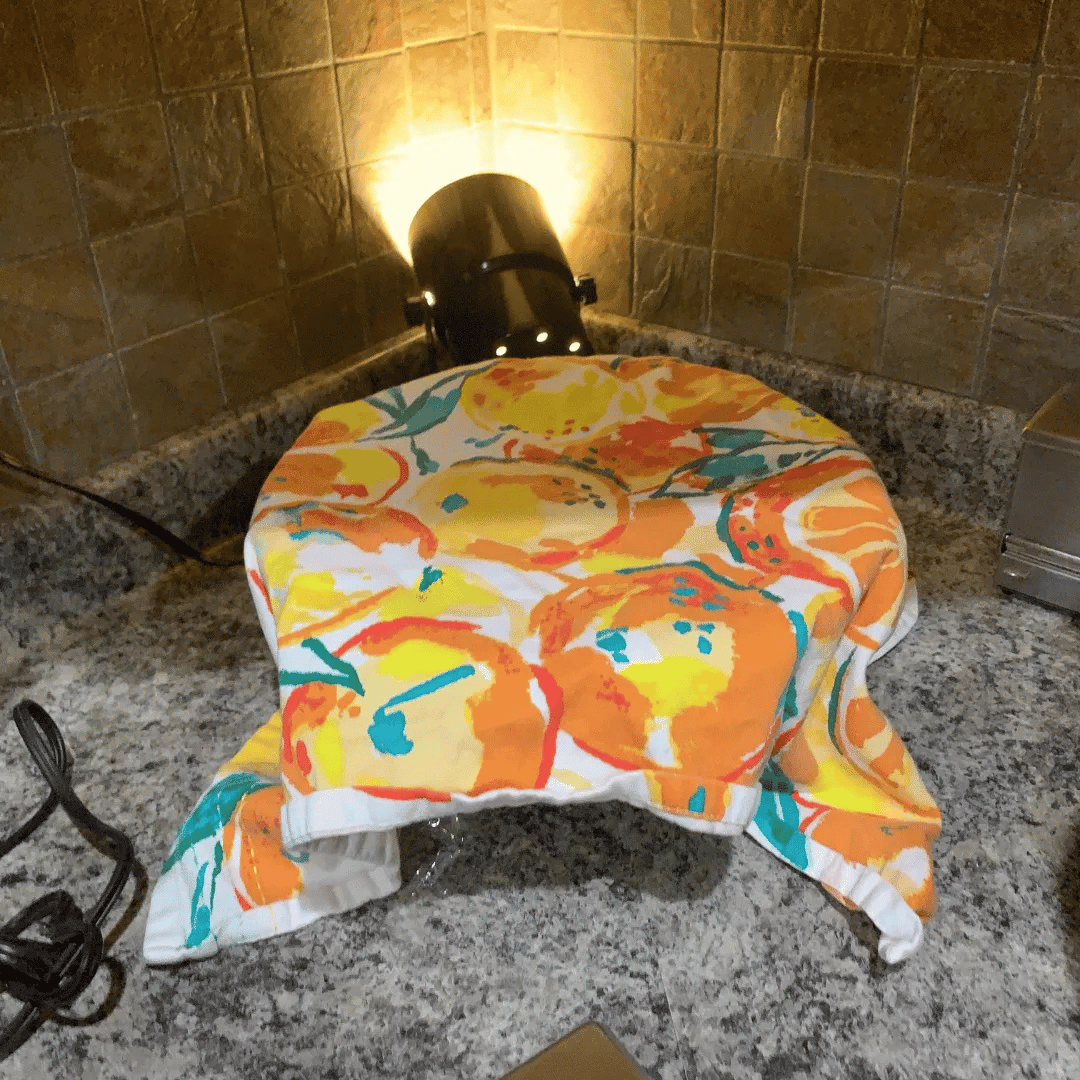
A cloth with a colorful orange, yellow, and teal fruit pattern draped over a plate on a granite countertop in a kitchen.

The dough’s tucked in for a little rest, go ahead and take one too.
Then gather what you need: a warm drink, a book, and let the dough and your spirit rise. 

Uncooked yellow potato on a metal surface, with a glass bowl nearby.

Step 8: Once the Dough Has Doubled in Size 

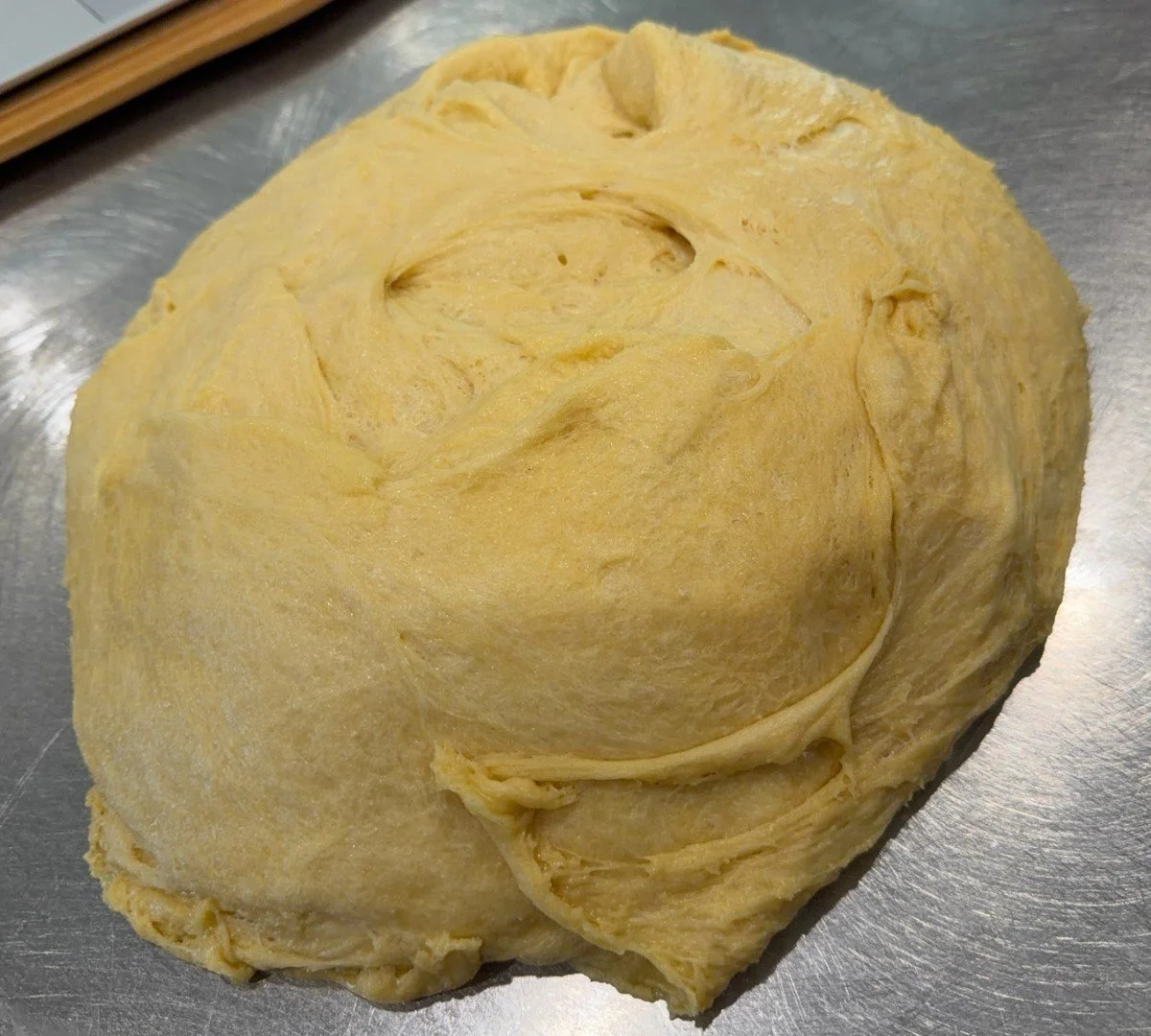
Very lightly spray a small area of your work surface. You may even want to wipe some of it off to ensure it's super light. Let the dough fall gently onto a clean surface; no need to punch it down.
Why We Don’t Punch It Down
This dough is soft and rich, and all those little air bubbles created by the yeast help keep it tender. Punching it down would knock out too much of that softness. Instead, we handle the dough gently to preserve its beautiful texture.

A durian fruit with its outer shell partially removed, showing the yellow flesh inside.

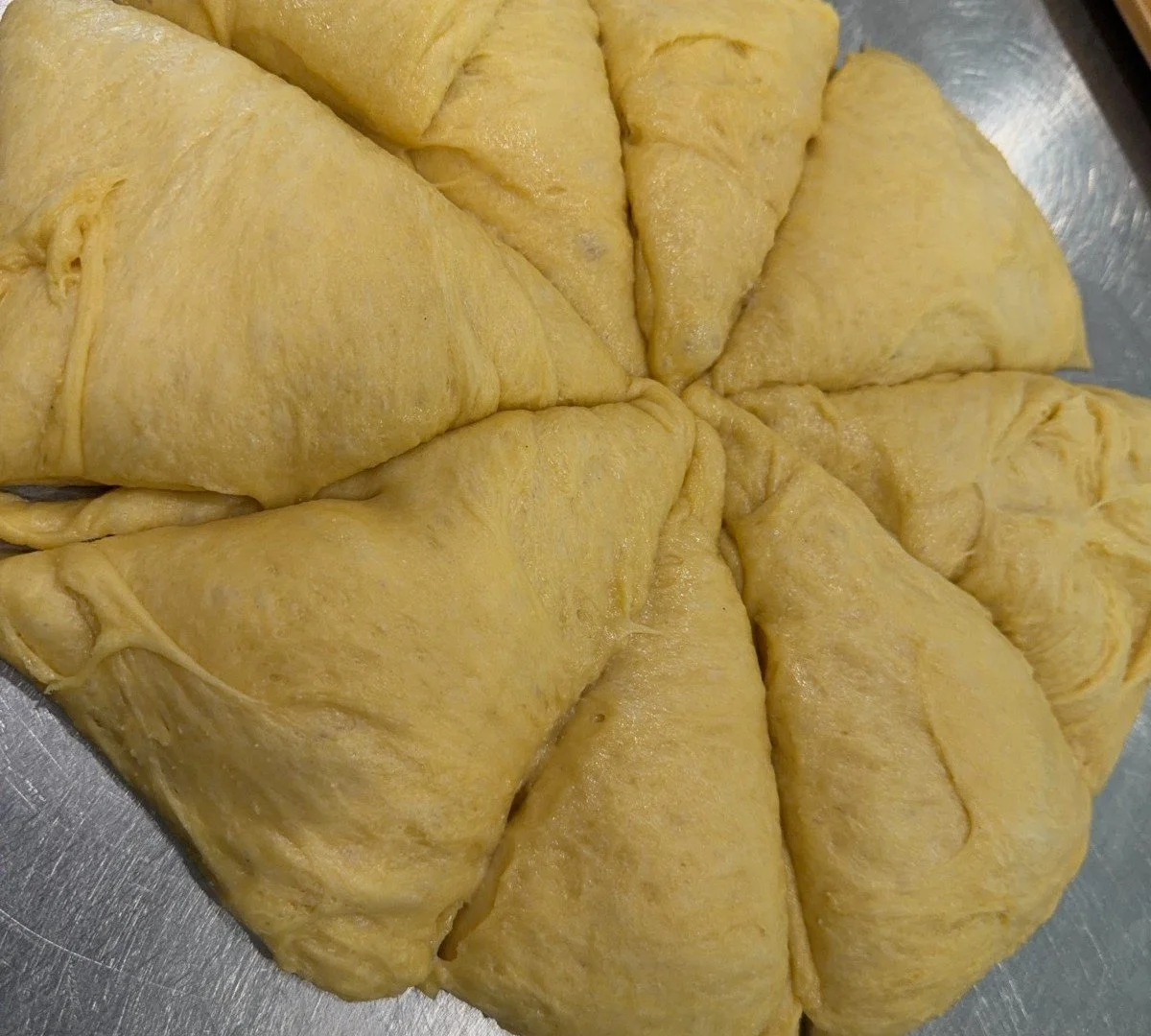
Step 9: Dividing the Dough

Using a sharp, non-serrated knife (or a bench scraper), cut the dough cleanly, no sawing. To divide evenly:

Cut the dough in half.

Cut each half in half again, so you now have 4 pieces.

Cut each of those 4 pieces in half one more time, making 8 even pieces.

If the sizes aren’t perfectly even (like mine in the picture), don’t stress. Just pinch or adjust as needed. You’re aiming for close enough, not perfection. I adjusted mine as I went along, and it worked out great.

Uncooked durian fruit pieces on a metal surface.
Two pieces of twisted dough on a metal surface with two glass bowls nearby.
A twisted piece of cookie dough on a metallic surface.

Step 10: Shaping and Braiding the Dough

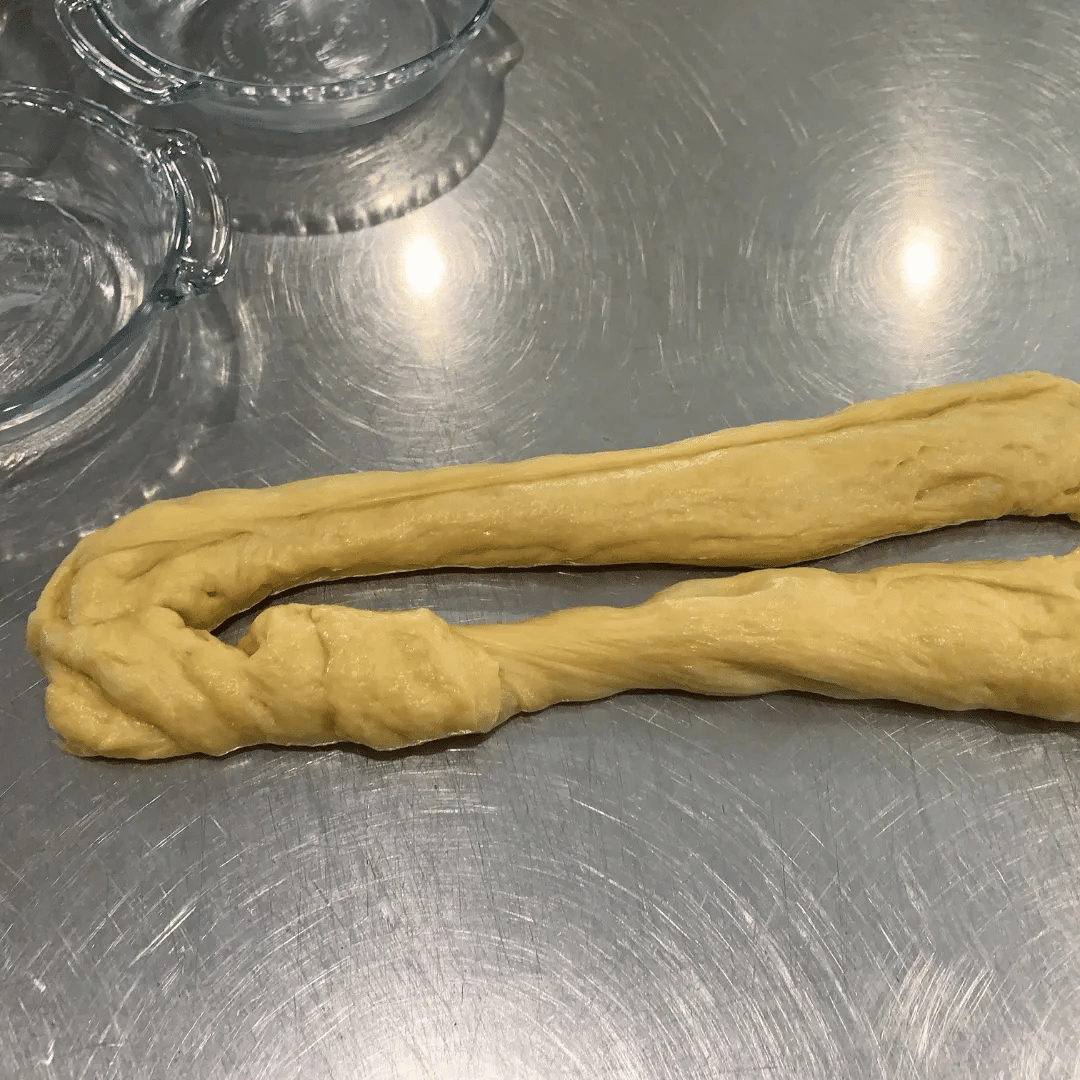
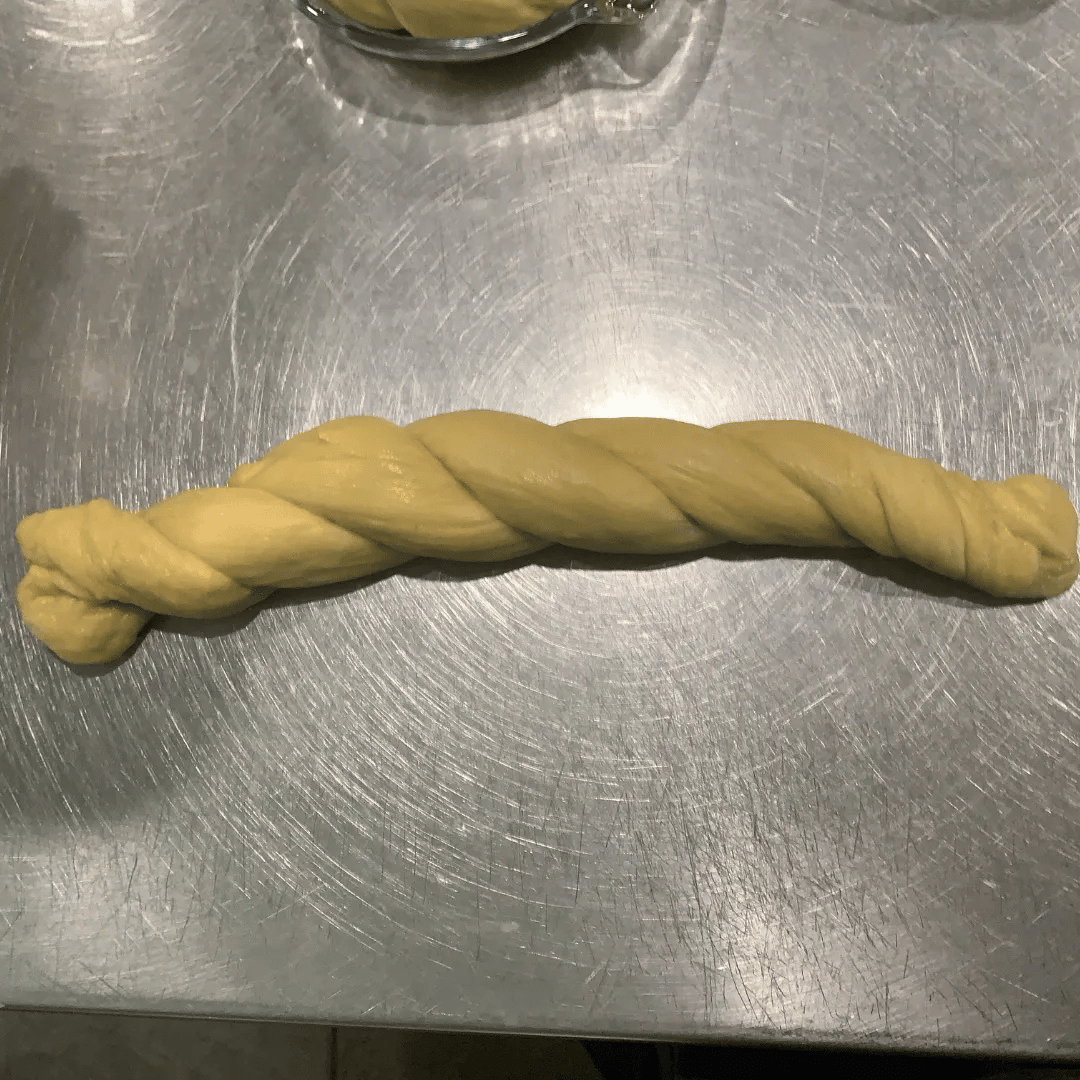
Roll each piece of dough into a rope about 15 to 16 inches long. You’ll need two ropes per loaf, making four braided loaves.

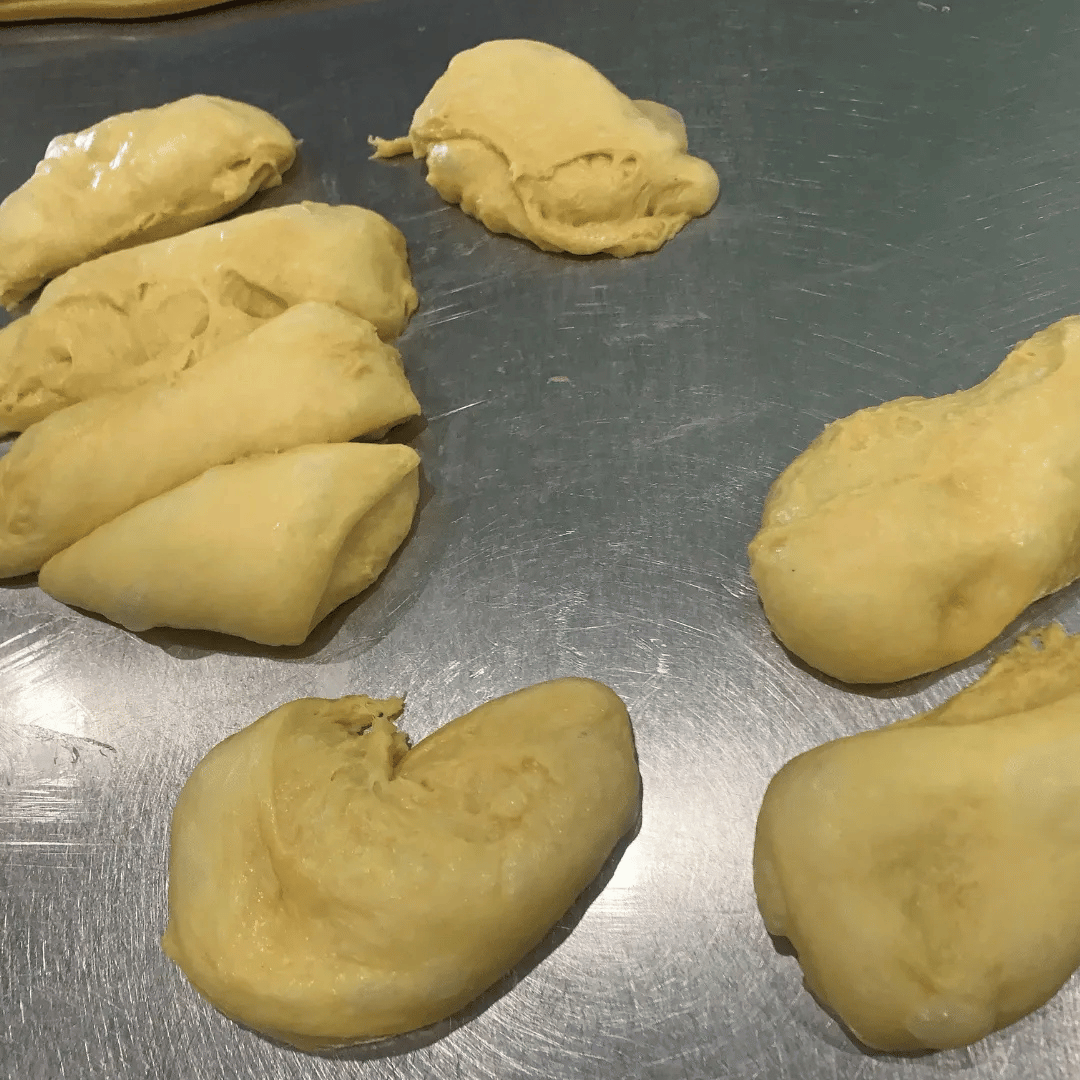
Lay two ropes side by side and pinch them together at one end to start your twist. If the dough doesn’t come apart perfectly when you cut it, don’t worry, you can easily piece it back together, like I did in this picture. The dough will come together as you shape it, and it won’t affect the final result!

Twist them gently to form a braid, pinching the ends together once finished.

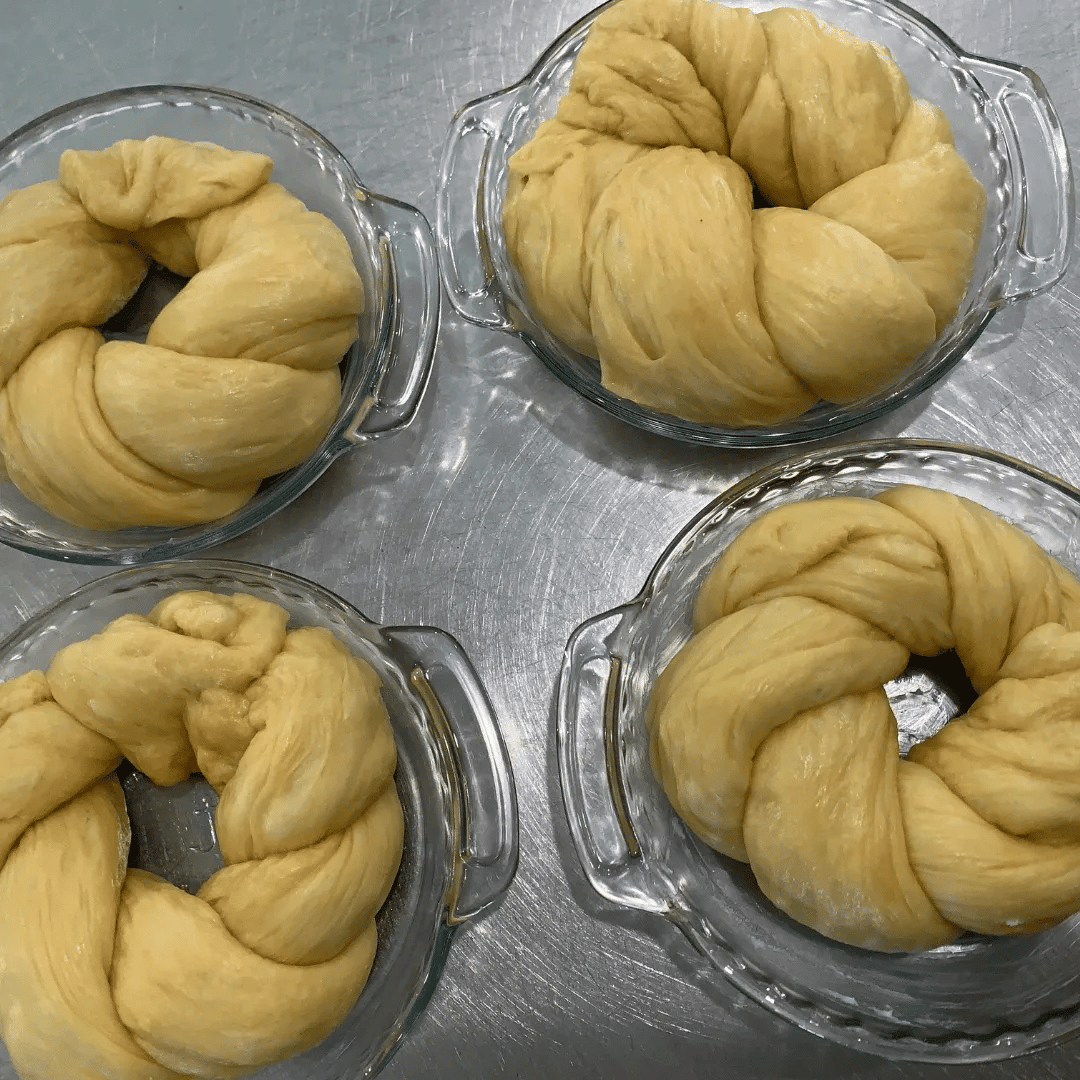
Four glass bowls filled with uncooked croissants or pastry dough on a metallic surface.

Step 11: Place Each Braided Rope into a Greased 6-Inch Pie Plate in a Circle

Place each braided piece of dough (one twisted rope) into the greased 6-inch pie plate in a circle. Once it’s in place, tuck the ends together to form a nice, round shape.

As you can see in the picture, I pieced together some of the dough after twisting and placing it back in the pie plate. That’s totally fine. The dough will come together beautifully as it rises and bakes.

 Now they are ready for the final rise.

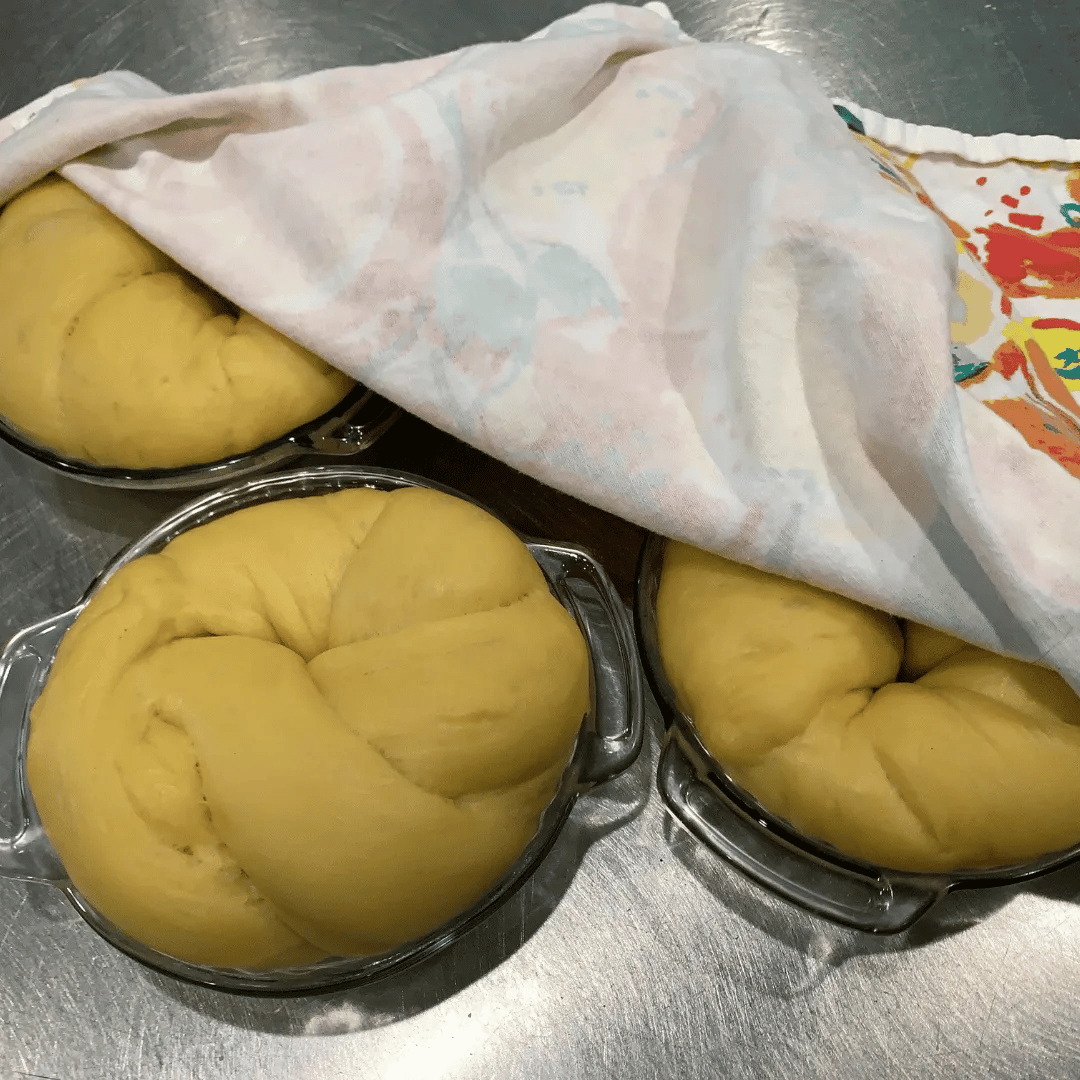
Three fresh, yellow lady apples in small glass bowls, partially covered with a decorative cloth on a stainless steel surface.

Step 12: Proofing Options for the Final Rise

Cover the plates with a clean flour towel and let the dough rise one last time.

Choose the method that works for you.

  1. Warm Oven Method (Great for cool kitchens):

Turn the oven on for 1–2 minutes, then turn it off.  Place the plates in the warm (but turned off) oven and let the dough rise for 1½ to 2 hours.

2. Proofing Oven Method (For anyone who may have an oven with a proofing setting)

Ideal for a gentle, consistent rise. Since this dough is rich with eggs and butter, it takes a bit longer to rise. Start checking around 45 minutes. Full proof usually happens between 50–55 minutes

3. Room Temperature Method (Simple and reliable):

Cover the plates and set them in a cozy spot if your kitchen is warm.
This method takes a little longer, 2½ hours, but works perfectly without any special equipment.

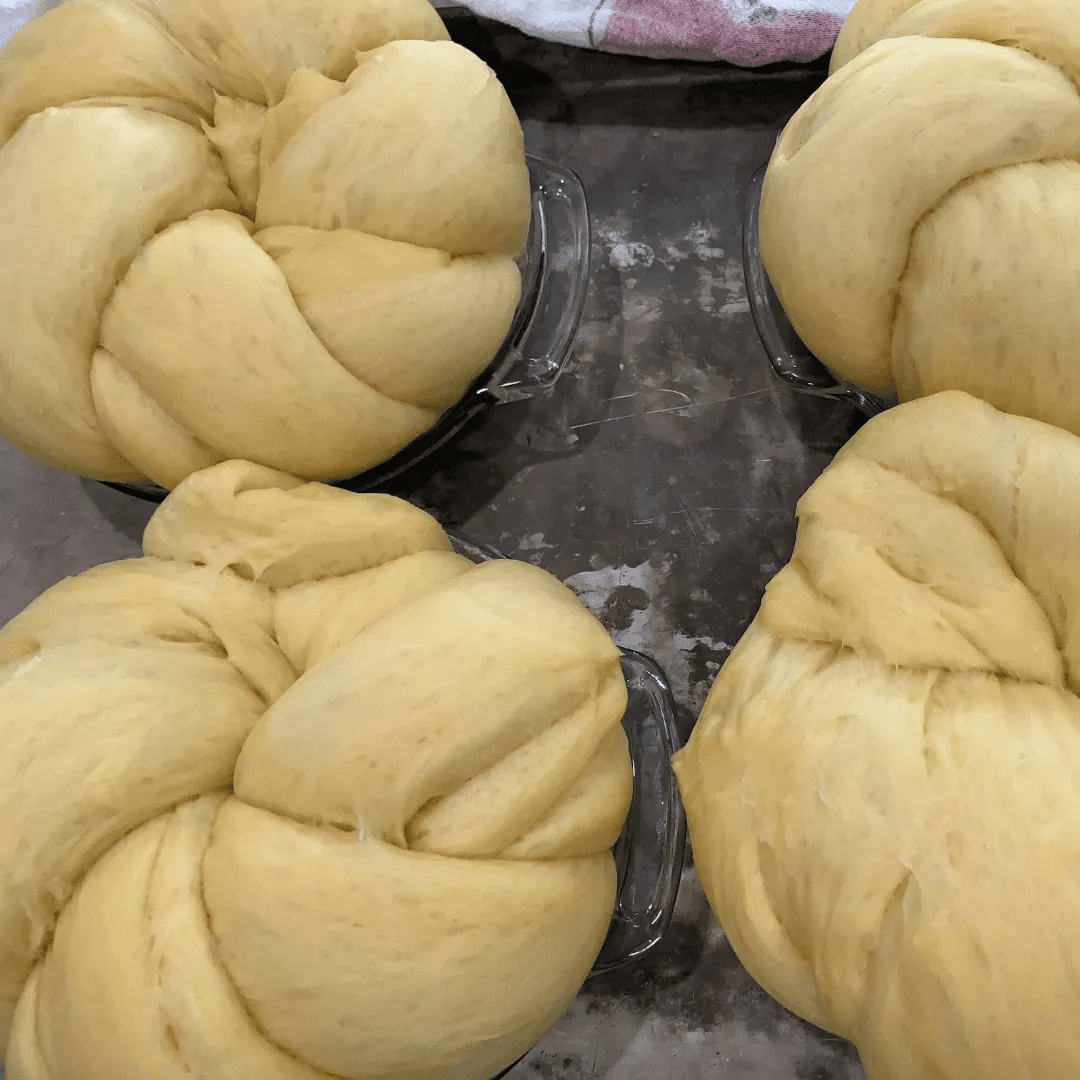
Four bowls of braided bread dough on a dark countertop.

Step 13: Here's What the Dough Should Look Like After the Final Rise

Once the dough has finished its final rise, it should be soft, pillowy, and fill the plate beautifully. It's okay if the braid details have softened a bit; they’ll bake into lovely, risen rings.

Visual Clues:

  • The dough should swell and fill the plate, with the centers of the loaves gently touching. 

  • The surface will go from shiny to slightly dull. 

  • The loaves will look soft and pillowy. 

They may lose some of their braid definition, but that's perfectly fine; they’ll bake up into soft, beautifully risen rings.

Step 14: Time to Bake

If you're using the oven-proofing or oven-raising method, remove the dough from the oven. Preheat your oven to 350°F and position the oven rack at the lowest level. Once the loaves are in the oven, reduce the temperature to 325°F and bake for an additional 20 minutes.

After 20 minutes, reduce the temperature to 300°F and bake for another 6 to 10 minutes, or until the internal temperature reaches 190°F.

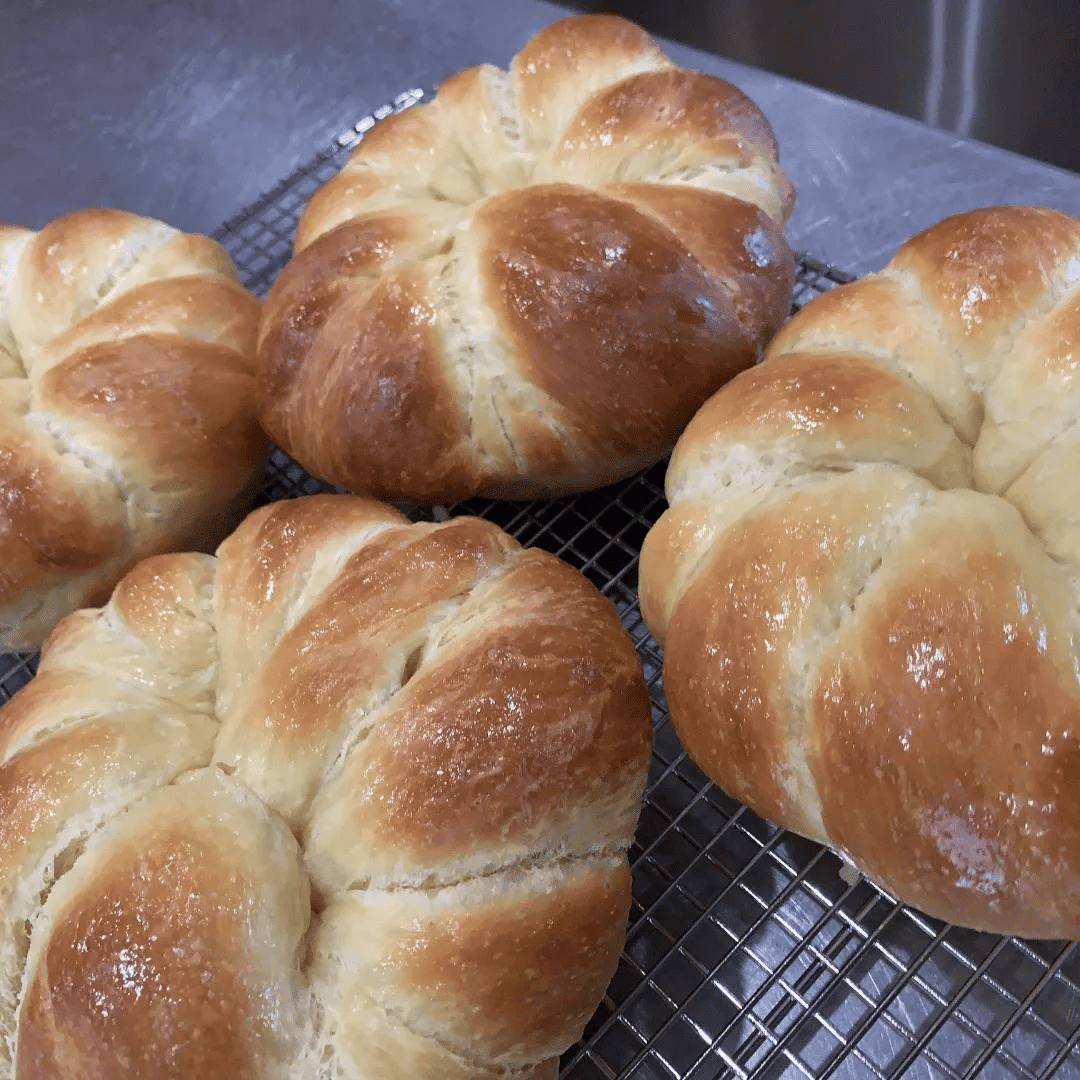
Freshly baked croissants on a cooling rack.

Step 15: Check for Doneness

  • The tops should be golden

  • The bottoms should be lightly browned

  • Internal temperature should read 190°F if you’re using a thermometer. (But don’t worry if you’re not—just look for a golden top and a firm, lightly browned bottom)

This final check ensures both texture and doneness. Look for a nice golden finish on the outside.

Step 16: Let the Bread Cool

Let the bread cool in the plates for 5 minutes, then remove the loaves from the plates. Place them on a cooling rack and brush the tops with butter.

This is the point where we dig in! 

Cool completely on cooling racks for about 2 to 3 hours before wrapping them in plastic wrap.
(If you cover them too soon, the bread will sweat and turn soggy. You’ll know it’s ready when the loaves are at room temperature, around 75°F internal temp. or lower.) 

Your kitchen will smell like heaven, sweet and buttery, with a hint of anise. It’s amazing warm with a little butter or toasted the next day.

Bread Chat 

Storing & Freezing Tips

These loaves hold up beautifully—even after a few days or when frozen.

To store at room temperature

Once fully cooled, place in a twist-tie baggie or wrap in plastic wrap to keep the air out. It stays fresh for up to 3 days on the counter.

Freezing Easter Bread

Let the loaves cool completely (internal temp around 75°F or lower). Then, wrap each one tightly in plastic wrap, followed by aluminum foil. Place in a freezer-safe bag, pressing out as much air as possible.

Thawing Easter Bread

Remove the bread from the freezer and leave on the counter until thawed, around 4 hours. Unwrap when fully thawed and enjoy.

We like to bake ahead—one loaf to enjoy fresh, and the rest to freeze. We share some with family and save a few for Easter dinner. It's a fun tradition that everyone looks forward to! 

Q: Is it important to use the 6-inch pie plates, or can I use a different size?

A: The 6-inch pie plates are my personal twist on the family recipe. For this recipe, my sisters and Grandma always baked two loaves. I switched to four 6-inch pie plates because I love the smaller, shareable rounds, but the original tradition was two larger, beautiful loaves.

If you’d prefer to use the original 9" plates, like grandma used, no problem. Just be aware that the baking time will need to be adjusted. The key is to watch for the golden color or check for an internal temperature of 190°F to ensure it’s fully cooked. 

No matter what size plate you use, the bread will come out soft, golden, and full of love—just like Grandma’s.

Q: What if I don’t use the anise extract?

A: The anise gives the bread a distinctly Italian flavor—sweet with a hint of licorice. Leaving it out makes the bread more like paska, a traditional Easter bread in many Eastern European families. Either way, it’s soft, celebratory, and perfect for sharing.

 Want to share how your loaves turned out or just say hi? You can reach me here

If you made it this far, you’re basically part of the family now.

Thanks for baking with me. I hope this brings a little piece of our family’s tradition to your table. 🌞 

Quick Recipe Card

Homemade Easter Bread (Grandma’s Recipe)
Yield: 4 small loaves (6″ pie plates)
Prep: 30 min • Rises: 1h15 + 1h15 + 1.5–2h • Bake: ~30–40 min • Total: ~6–7 hrs

Ingredients

  • 6 cups (720g) all-purpose flour

  • ½ cup (100g) sugar

  • ¼ cup (30g) vital wheat gluten (optional)

  • 2 tsp (12g) salt

  • 8 large eggs (about 1⅔ cups / 391g), room temp

  • ½ cup half-and-half (warm ~110°F)

  • 5 tsp instant dry yeast

  • 2 Tbsp (1 oz) anise extract (optional)

  • ½ cup (110g) salted butter, melted & cooled

Steps

  1. Warm half-and-half; melt & cool butter; bring eggs to room temp.

  2. Bowl: flour, sugar, gluten (opt), salt, eggs, anise (opt), butter; add yeast last.

  3. Mix 6–8 min on stand mixer speed 2 until soft, tacky, elastic.

  4. Rest 15 min covered.

  5. Tuck & turn into a smooth ball; place in greased bowl/insert.

  6. Rise 1: ~1h15 (warm oven/light or Instant Pot Yogurt ~30 min or room temp 1½–2h).

  7. Gently deflate, reshape. Rise 2: same times as Rise 1.

  8. Divide into 8; roll ropes 15–16″; twist pairs (4 braids).

  9. Coil each braid in greased 6″ pie plate. Final proof: 1½–2h (soft, pillowy, fills plate).

  10. Bake: preheat 350°F, then bake low rack 20 min at 325°F; reduce to 300°F 6–10 min to 190°F internal.

  11. Cool 5 min in plates; remove to rack; butter tops; cool completely before wrapping.

Storage/Freezing: Wrap airtight up to 3 days; or wrap plastic + foil and freeze. Thaw at room temp; unwrap when fully thawed.

Back to the Kitchen
There’s more on the counter.